


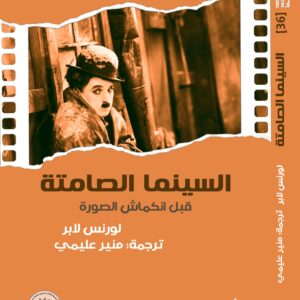
Silent Cinema – Before the Image Collapsed
28,75 SAR
20 people are viewing this product right now
🔥 6 items sold in last 3 hours
Before the emergence of sound and the advent of talking pictures, there was no need to classify “silent cinema” as a separate cinematic category. It was, in its simplicity, a complete and flourishing form of cinema—authentic, refined, and representing one of the most eloquent and influential means of mass communication of its era.
Silent cinema was a language of eyes and movement—faces that spoke in silence more expressively than words could ever convey. It was not a cinema lacking sound, but rather one whose beauty and charm were unique to its time, with its very subject being the essence of its art.
This book focuses particularly on the period following the First World War, a time marked by significant transformations in the art of cinema. It seeks to introduce new concepts to contemporary readers of this form of cinema, inspiring historical, critical, and theoretical discussions around both famous and lesser-known examples from across the world’s film industries.
Product brand

A Tunisian poet and translator, Mounir Alimi received the Carthage Poetry Days Award for his collection A Cemetery Still Alive. His body of work includes numerous translations, notably The Poet in His Mirror… Andrei Tarkovsky, alongside several poetry publications. He currently serves as Publishing Director at Safhat Sab’a Publishing and Distribution, based in Saudi Arabia.
Related products
64 in stock



Reviews
There are no reviews yet.